Arizona Heat vs. Your Wedding Hair: How to Choose a Style That Lasts
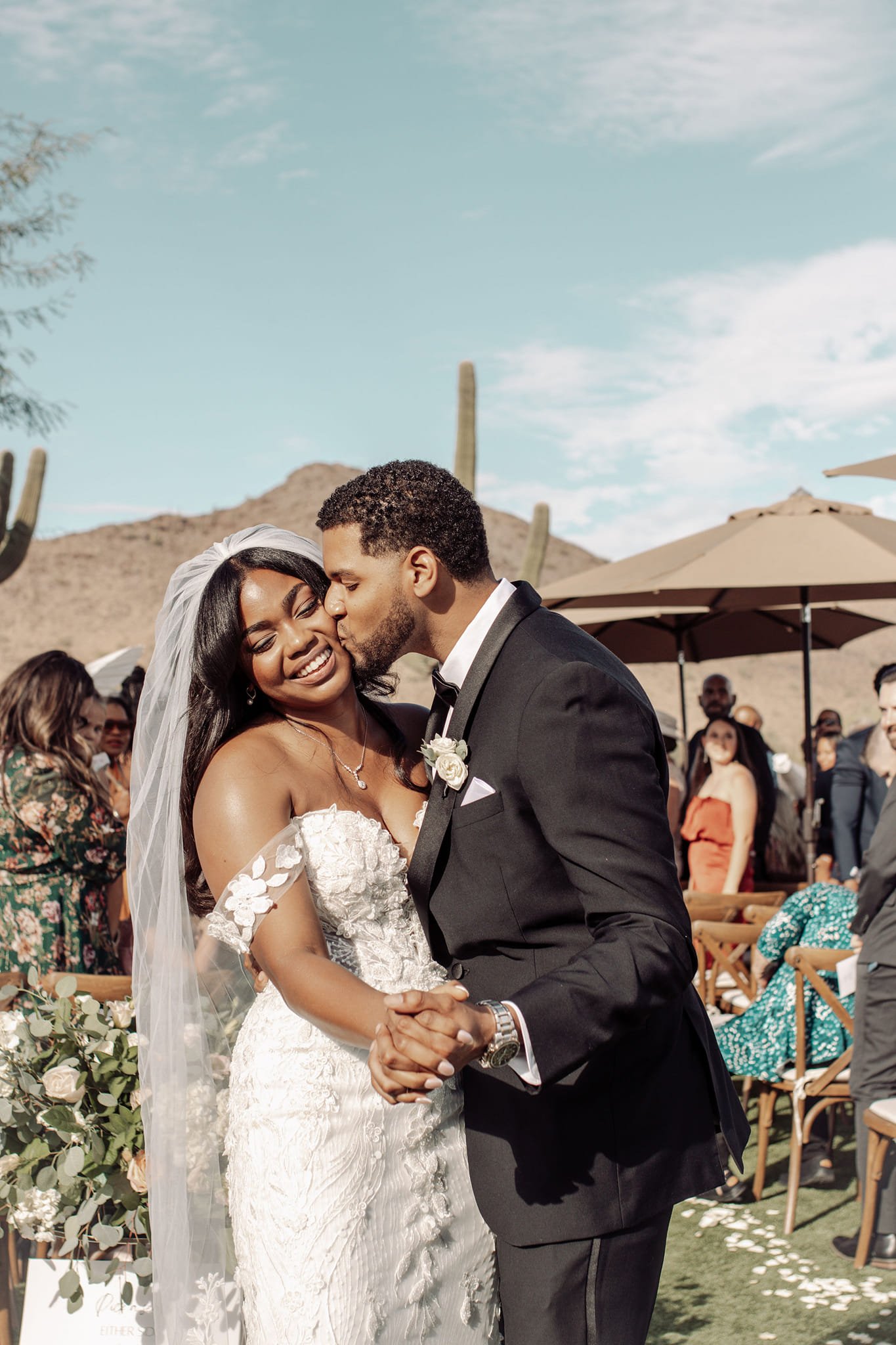
There is something particularly humbling about spending two hours creating the perfect wedding hairstyle only to walk outside and have Arizona say:
"That's cute."
If you've never experienced 110° heat in a formal hairstyle, let's just say your hair can develop opinions very quickly.
Then add a little wind.
Maybe a monsoon storm.
Possibly a haboob rolling through somewhere nearby.
Suddenly, your wedding hairstyle has entered an entirely different competition.
And yes, Arizona's weather can be intense. The National Weather Service regularly issues Heat Advisories and Extreme Heat Warnings during the hottest months, and monsoon storms can bring strong outflow winds, blowing dust and sudden changes in conditions. In 2025, one Phoenix-area dust storm produced wind gusts of roughly 50–65 mph and visibility reductions to less than a quarter mile in some locations.
But here's the thing:
We aren't trying to create a hairstyle that can survive anything Arizona throws at it.
We're trying to create a hairstyle that works for you.
Because the best wedding hairstyle isn't necessarily the one that lasts the longest.
It's the one that balances your personal style, your hair characteristics, your wedding-day conditions and how you actually want to feel.
Up or Down? Let's Start There.
One of the first decisions many brides make is whether they want their hair up or down.
And while there are some general advantages to each, there isn't one universally "better" option for an Arizona wedding.
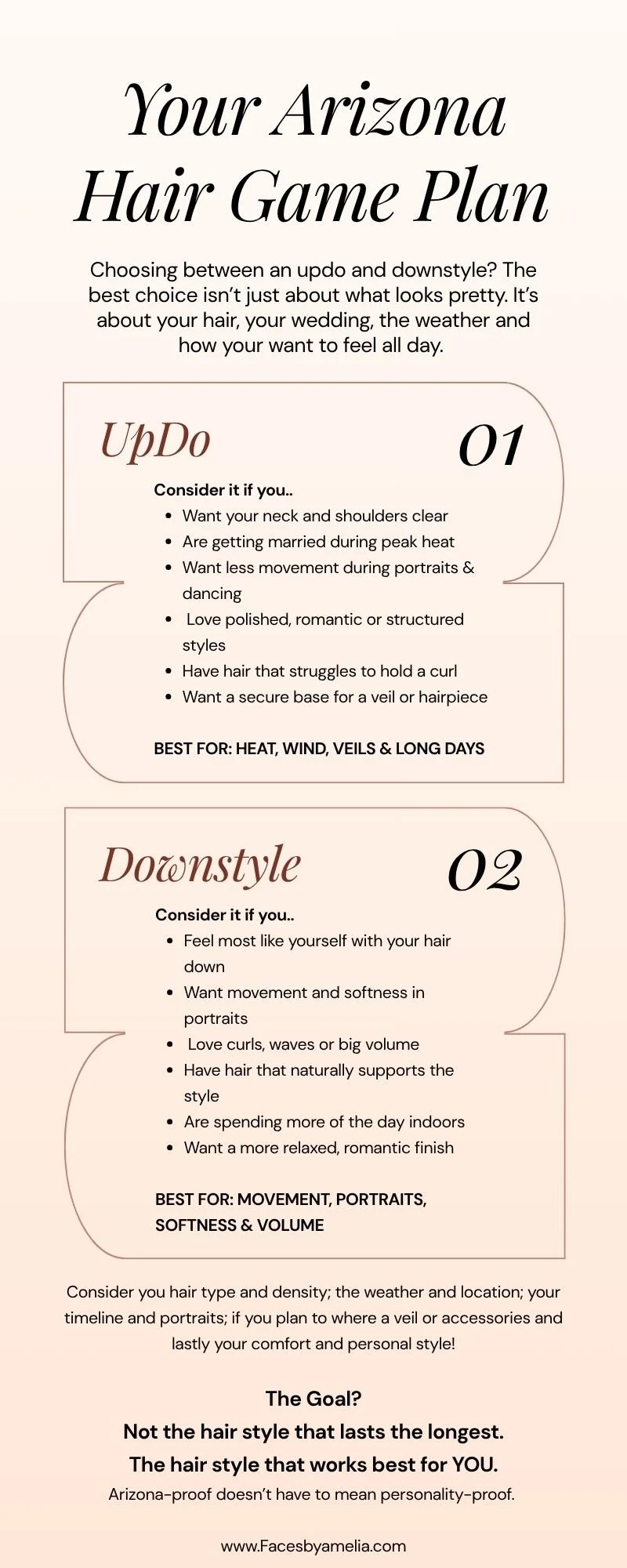
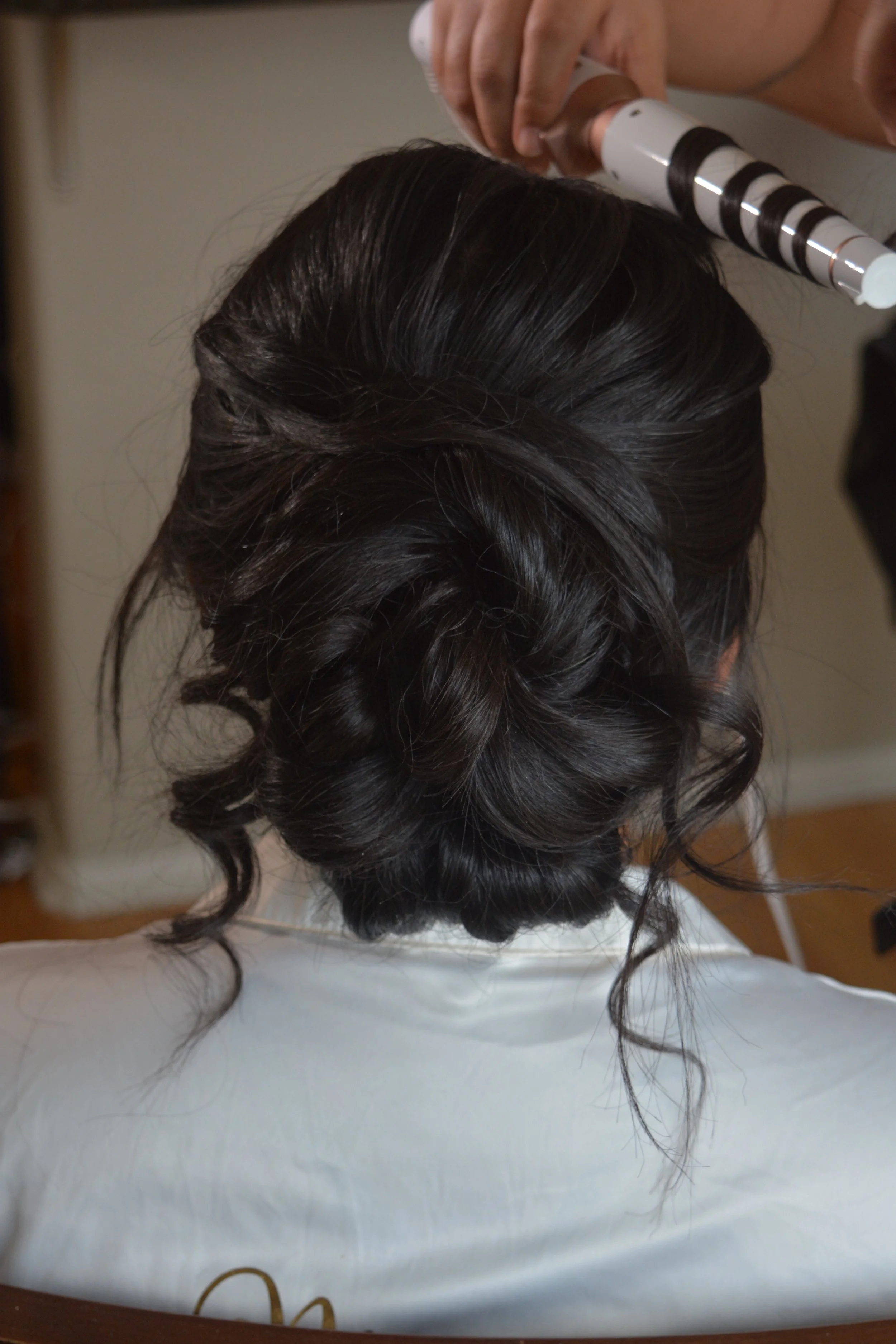
An Updo May Be a Great Fit If...
You want your hair completely off your neck.
You're getting married during a particularly warm part of the year.
You love a polished, structured or romantic style.
You want less hair movement during portraits and dancing.
You have hair that tends to lose its shape when worn down.
You want to incorporate a veil, hairpiece or other accessory securely.
An updo can also be incredibly comfortable when the temperature climbs. Getting that weight and volume off your neck can make a surprising difference when you're already warm.
A Downstyle May Be a Great Fit If...
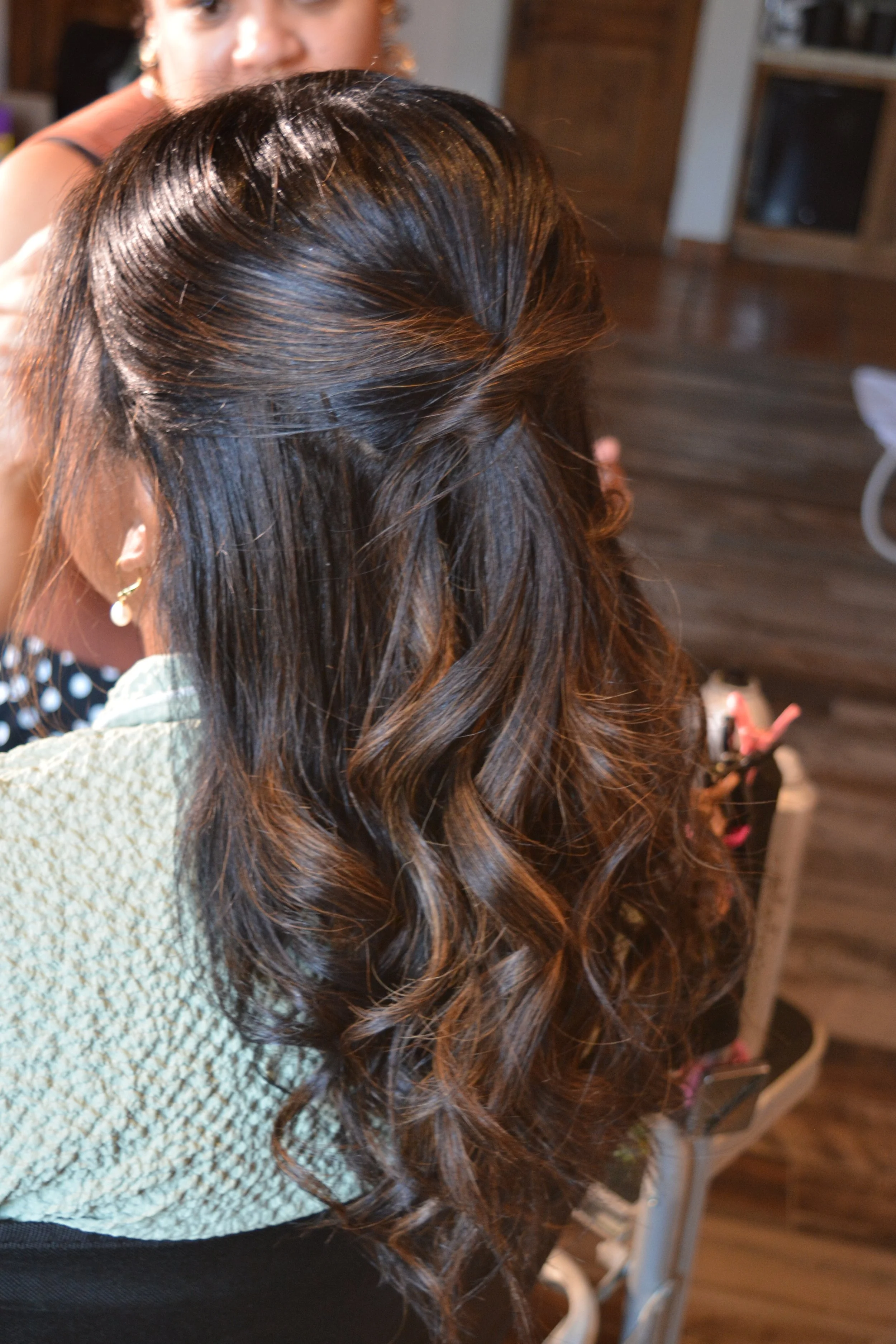
You feel most like yourself with your hair down.
You want movement and softness in your portraits.
Your dream look involves curls, waves or lots of volume.
Your hair naturally holds the style you're requesting.
You're getting married during a milder season or spending most of the day indoors.
And yes, you can absolutely wear your hair down for an Arizona wedding.
The goal isn't to scare you into an updo because it's hot.
It's to make sure you understand what your hair is likely to do under the conditions you're putting it in.
Dry Heat vs. Humidity: They're Not the Same Problem
This is where Arizona gets interesting.
People love to say:
"But it's a dry heat!"
And they're right.
Until monsoon season shows up.
Arizona's summer monsoon season typically brings an influx of moisture into the Desert Southwest, creating conditions that are very different from the intensely dry heat we're known for.
That matters because different hair types can respond very differently to those conditions.
Fine, straight hair may struggle to maintain volume or curl when there's significant weight working against it.
Very dense hair can have the opposite problem. There may be plenty of volume, but the sheer weight of the hair can pull curls out.
Curly and coily textures may respond to changes in moisture and humidity differently depending on the individual's hair characteristics, styling routine and products.
And chemically treated hair may behave differently again.
There isn't a universal "Arizona hairstyle."
There is your hair in Arizona.
That's why your stylist needs to understand your actual hair rather than simply looking at a reference photo.
Your Hair's Texture, Density & Weight Matter More Than Pinterest
Let's say you bring in a photo of a gorgeous, soft, voluminous curl.
Beautiful.
But the person in the photograph has fine, lightweight hair with extensions, and you have extremely dense hair that reaches your waist.
Those two styles may look similar in the finished photo while requiring completely different strategies to create and maintain.
Or maybe you have naturally curly hair and your inspiration photo shows a sleek, polished style.
That doesn't mean it can't be done.
It means your stylist needs to understand how your natural texture behaves and plan accordingly.
This is why your consultation and trial are so important.
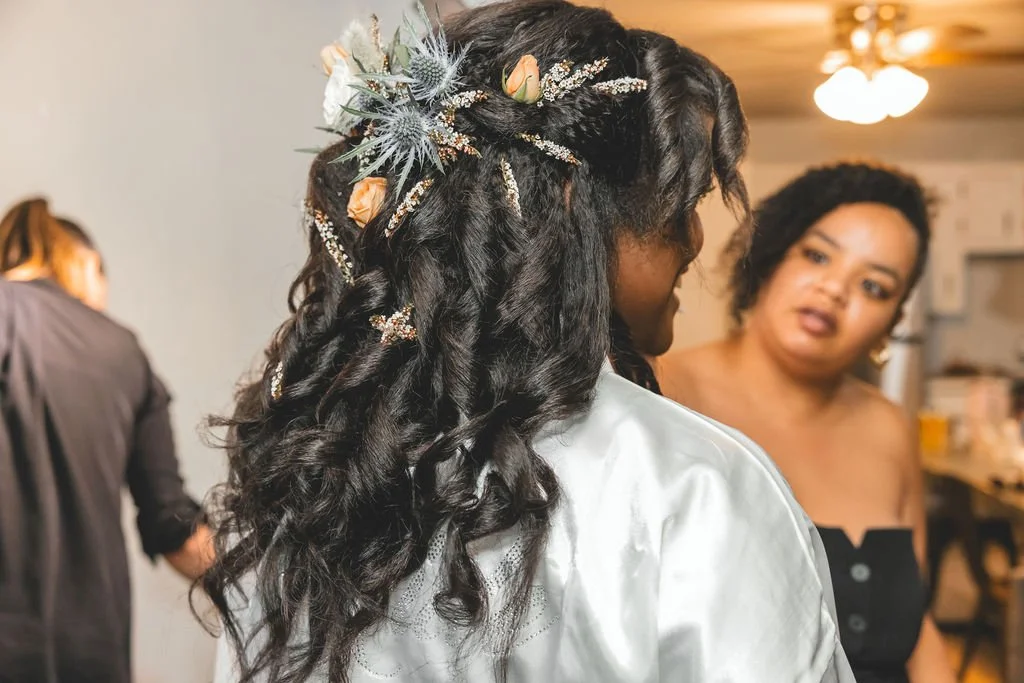
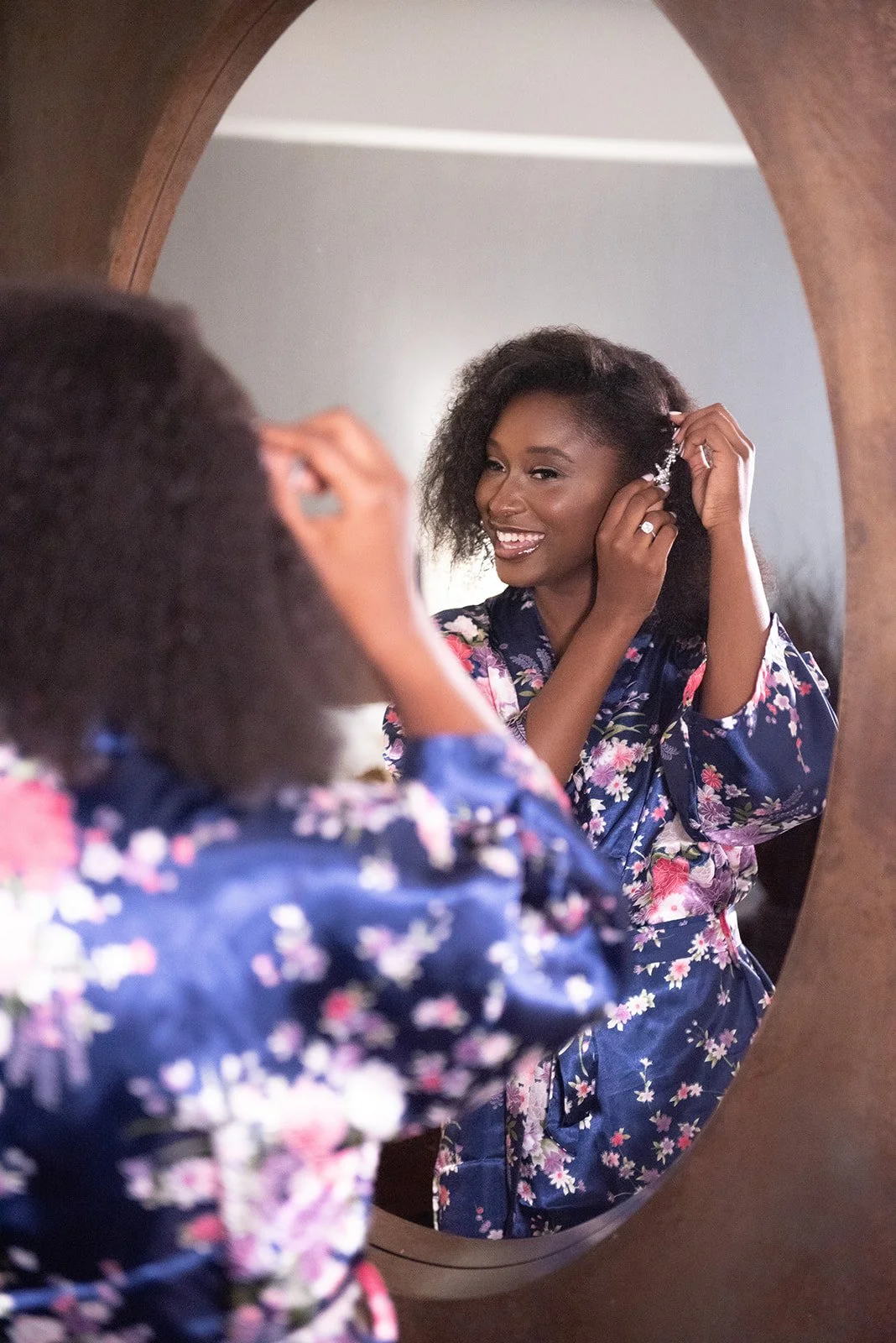
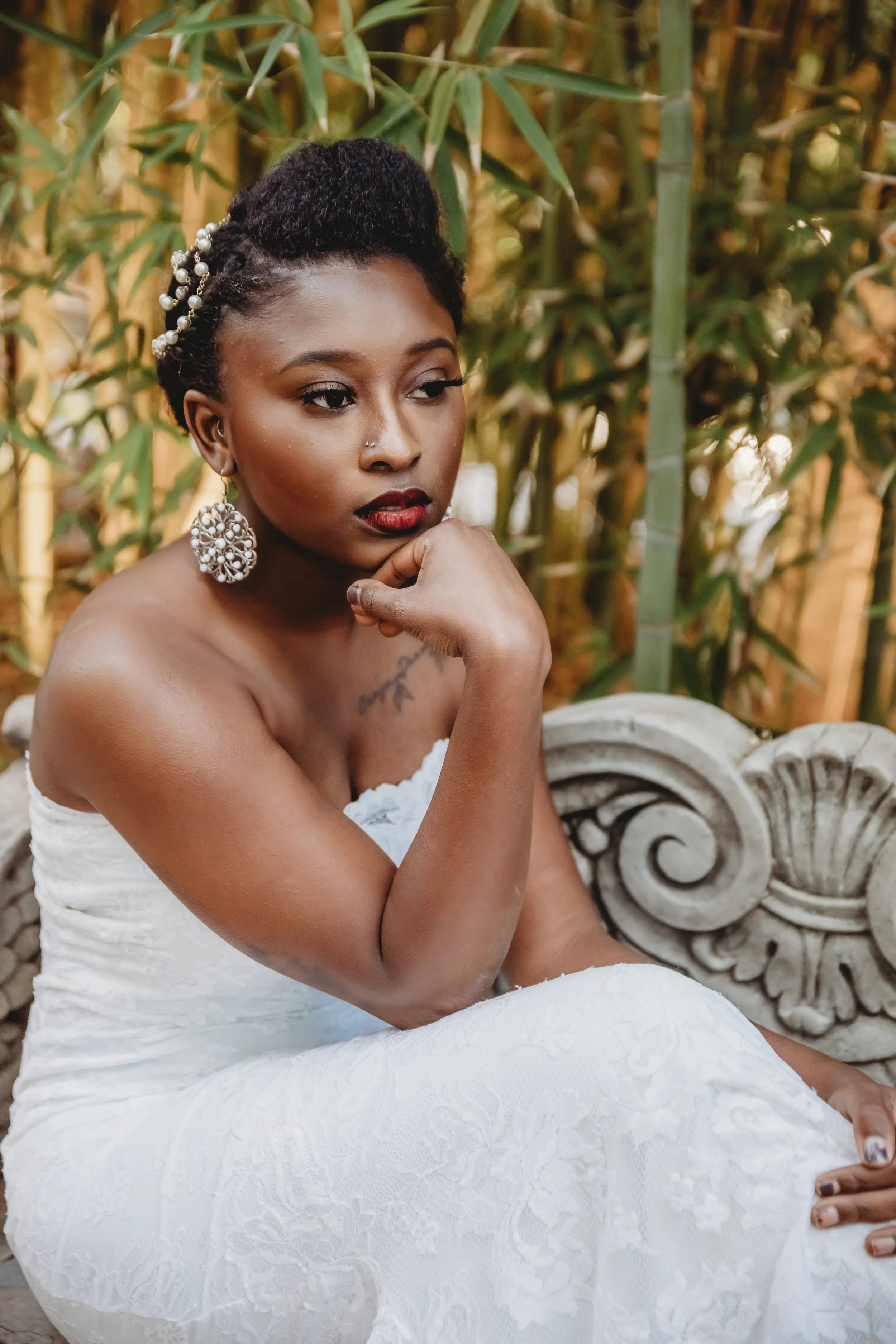
Bride ‘s natural hair is thick 4c pixie cut. We installed natural textured clip-in extensions to create her dream half up half down style for her Payson Wedding (which also had random rains).
We're not just asking:
"Do you like this hairstyle?"
We're asking:
"Can your hair realistically support this hairstyle, under these conditions, for this amount of time?"
And if the answer is yes, great.
If the answer is "yes, but we need to modify the approach," that's useful information too.
What About Extensions?
Extensions can be an incredible styling tool.
They can add length, density, volume and support where your natural hair may not have enough of one or more of those things.
But they're not automatically the answer to every wedding hairstyle problem.
Adding hair also adds weight.
And weight matters.
If your natural hair already struggles to hold a curl, adding significant additional length and density can potentially make that challenge greater rather than smaller.
The right extensions should support the style you're creating, not simply make your hair heavier.
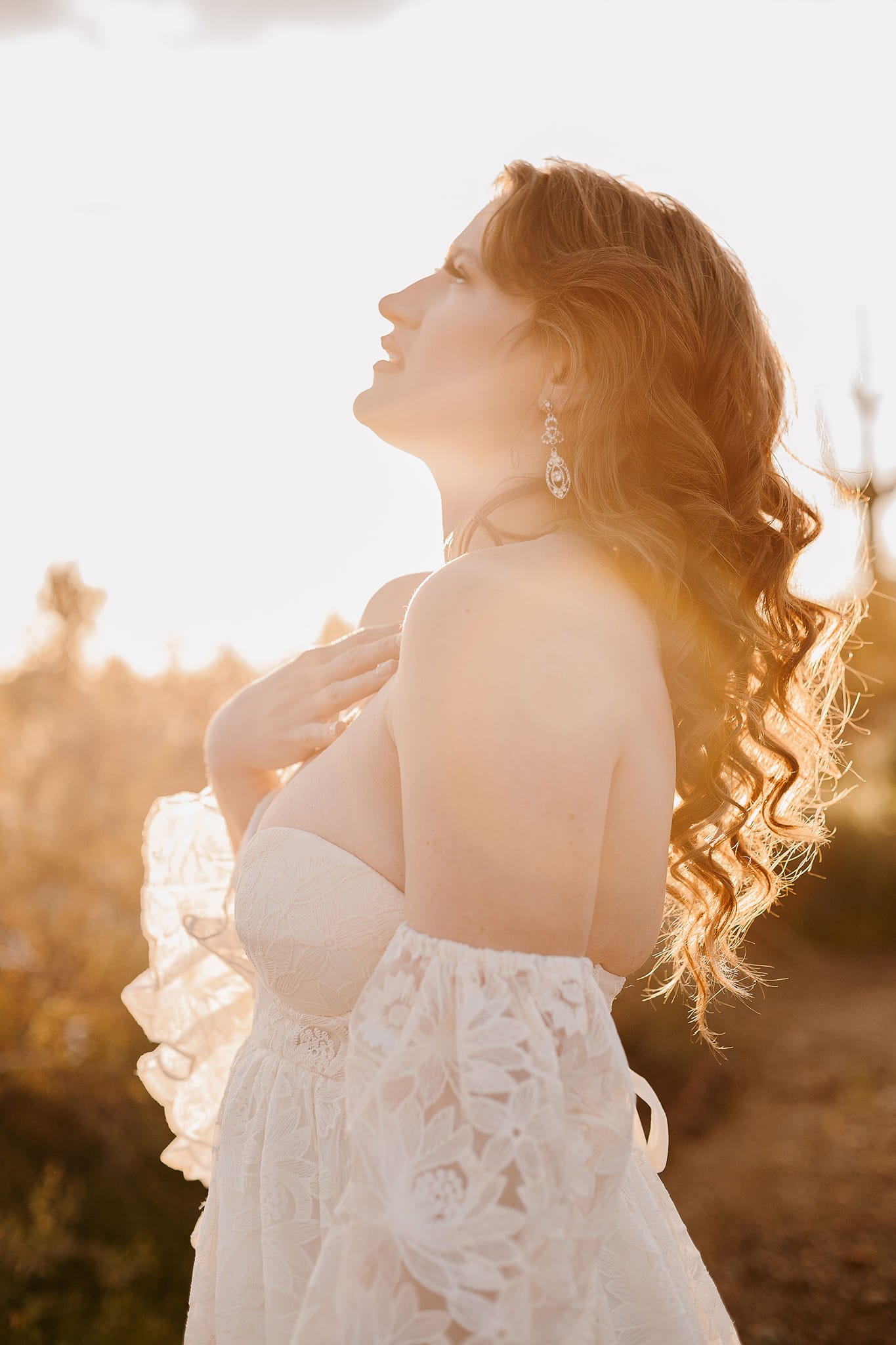
That's why extension decisions should happen before your wedding day, ideally before your trial and during consultation.
Your stylist can help determine whether you actually need them, how much hair is appropriate and what type of extension makes sense for the look you're creating.
Let's Talk About Curls
Curls are one of the biggest areas where brides can accidentally choose a style based entirely on the finished photograph.
A curl isn't just a curl.
Its longevity depends on the hair it's being created on.
Fine hair may need a different preparation strategy than thick hair.
Naturally straight hair that refuses to hold a curl may require a different approach than hair that naturally has movement.
Very dense hair may have enough body to create beautiful volume but enough weight to pull that curl down.
And textured hair has its own considerations based on its natural pattern, density, preparation and desired finish.
This is why your stylist may make recommendations during your trial that aren't exactly what you expected.
Maybe your dream is a huge, loose Hollywood wave, but your hair naturally drops a curl within an hour.
Maybe you want a full, romantic downstyle, but your hair becomes uncomfortable against your neck in the heat.
Maybe your inspiration photo needs extensions to achieve the fullness you're after.
None of those things mean your vision is impossible.
It means we're designing the version of your vision that makes sense for you.
And Then There's Your Scalp
This one doesn't get talked about enough.
Your hair can look incredible while you are absolutely miserable underneath it.
Arizona heat can make a heavy hairstyle feel very different than it did inside an air-conditioned bridal suite.
This becomes especially important with:
Very dense hair
Long hair
Extensions
Heavy updos
Thick braids
Multiple layers of added hair
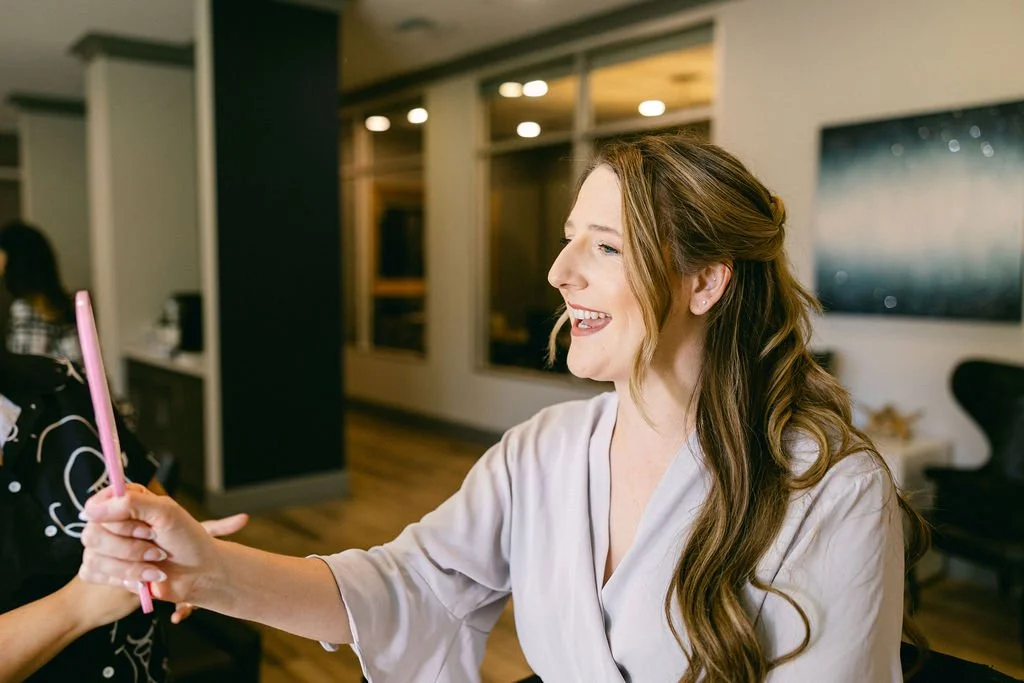
Your scalp is part of the equation.
We've even had male clients experience this firsthand. A groom with a full head of hair can be surprised by just how much heat accumulates under a carefully styled head of hair when temperatures climb.
And while we obviously want everyone looking good, comfort is part of looking good.
If you're miserable, you're going to feel miserable in your photographs.
Your hairstyle should support your day, not become something you're counting down until you can take it out.
Outdoor Portraits Change the Equation
This is where your timeline matters.
A hairstyle that looks perfect inside a cool bridal suite may encounter an entirely different environment once you begin taking outdoor portraits.
Heat.
Sun.
Wind.
Humidity.
Movement.
And potentially a veil.
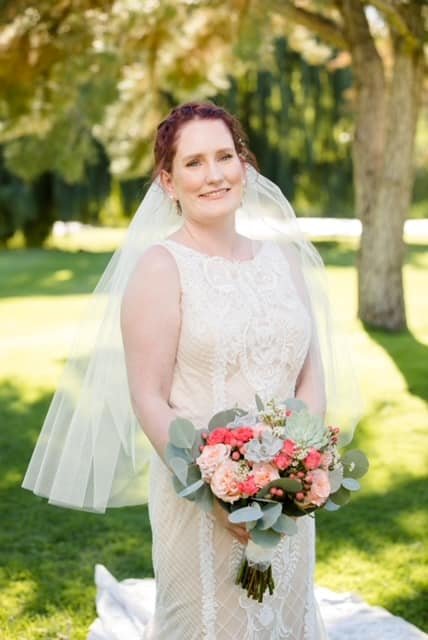
If your photographer has planned a 30-minute golden-hour portrait session, your hair needs to be able to exist in that environment too.
This is one reason we love knowing your timeline.
If we know you're spending significant time outside, we can make styling decisions with that in mind.
And if your venue has a gorgeous outdoor ceremony but you're getting ready inside, that distinction matters too.
Where you're getting married isn't necessarily where your hair is going to spend most of its day.
Wind Is Its Own Personality
Arizona wind can be completely harmless.
It can also be the reason your veil suddenly becomes a kite.
😂
Wind doesn't necessarily mean your hairstyle is doomed.
But it does mean we need to think about movement.
Loose pieces, long curls, veils and lightweight accessories can all behave differently when the wind picks up.
If you're getting married somewhere particularly exposed, tell your beauty team.
For example if you’re getting married in Flagstaff, when you are doing your rehearsal send your beauty team an update on the weather conditions.
And definitely tell your stylist if your hairstyle depends on a very specific placement of loose curls or face-framing pieces.
Sometimes a tiny modification can make the difference between:
"This is exactly what I wanted."
and
"Why is my hair in my mouth?"
Don't Forget the Veil
Your veil isn't an afterthought.
At least, it shouldn't be.
Where and how your veil is attached can affect your hairstyle, your comfort and what happens when the veil comes out.
A cathedral-length veil in a windy outdoor ceremony is a very different situation from a short fingertip veil during an indoor ceremony.
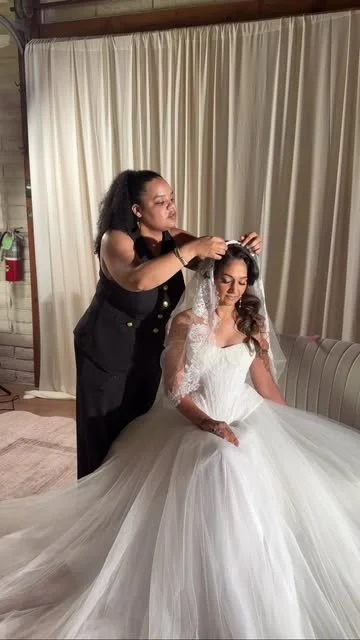
Your stylist should know:
What type of veil you're wearing
How heavy it is
Where you want it positioned
Whether you'll be removing it
Who will remove it
Whether you want your hairstyle to remain completely intact afterward
If you're planning a dramatic veil moment, let's plan for the hairstyle underneath it too.
So What Happens When Your Hair Needs a Little Help?
Here's where touch-ups come in.
And just like makeup, a hair touch-up doesn't mean your original style failed.
It means you had a wedding.
If you've spent hours outside, hugged 100 people, danced, cried, taken portraits and moved around all day, a few pieces of hair may need attention.
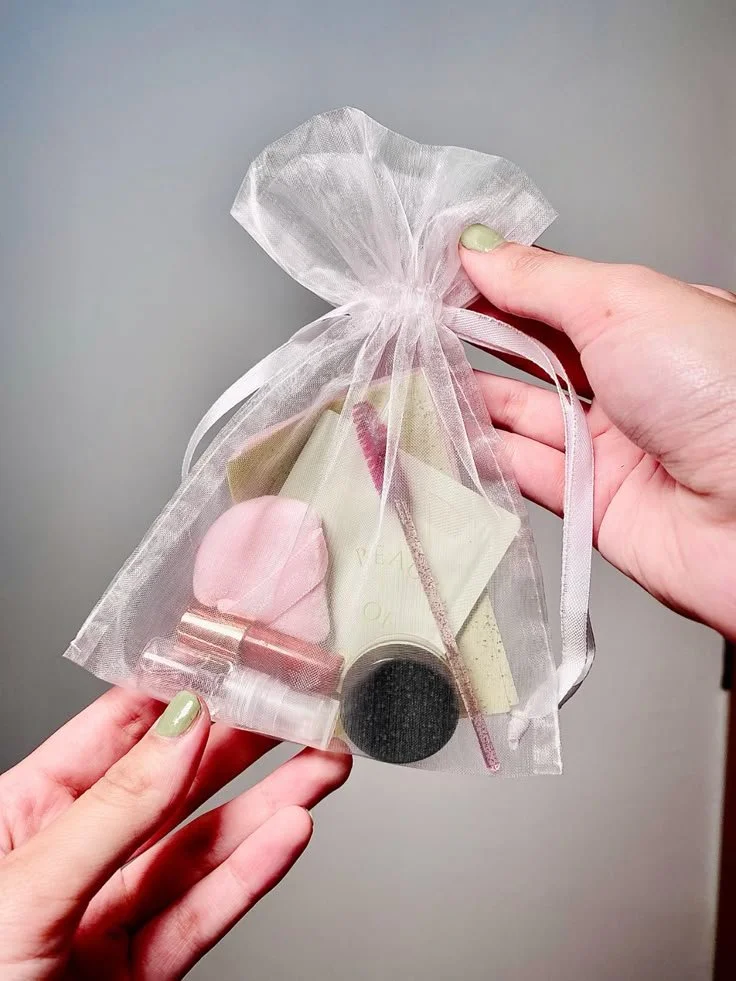
Our kits include lip touch up, lip wand, spoolie, puff, loose powder, beauty blender, happy tears tissues and a mint.
Your stylist can help you determine what, if anything, you should have available for the rest of the day.
That might mean:
A small amount of hairspray
A few pins
A comb or brush
A styling product
Your veil or accessory kit
A designated person who knows what to do if something shifts
The goal isn't necessarily to have your hairstylist follow you around all night.
It's to create a style that doesn't require constant intervention in the first place.
The Best Arizona Wedding Hairstyle Is the One That Lets You Enjoy Your Wedding
This is really the whole point.
Your hairstyle doesn't have to be indestructible.
It doesn't have to look exactly the same at 10 PM as it did at 10 AM.
And you don't have to sacrifice the way you want to look just because you're getting married in Arizona.
You just need to understand the relationship between:
Your hair.
Your style.
Your environment.
Your timeline.
Your comfort.
When those five things are considered together, you can make much better decisions about whether your dream look should be worn up, down, with extensions, without extensions, curled, smoothed, braided or completely reimagined.
Because the goal isn't to spend your wedding day wondering whether your hair is holding.
The goal is to forget about your hair entirely.
You should be busy getting married.
One More Arizona Beauty Challenge...
We've talked about dry heat, humidity, sweat, wind and outdoor portraits.
But Arizona has one more trick up its sleeve:
Monsoon season.
And that's a completely different conversation when it comes to your wedding-day beauty.
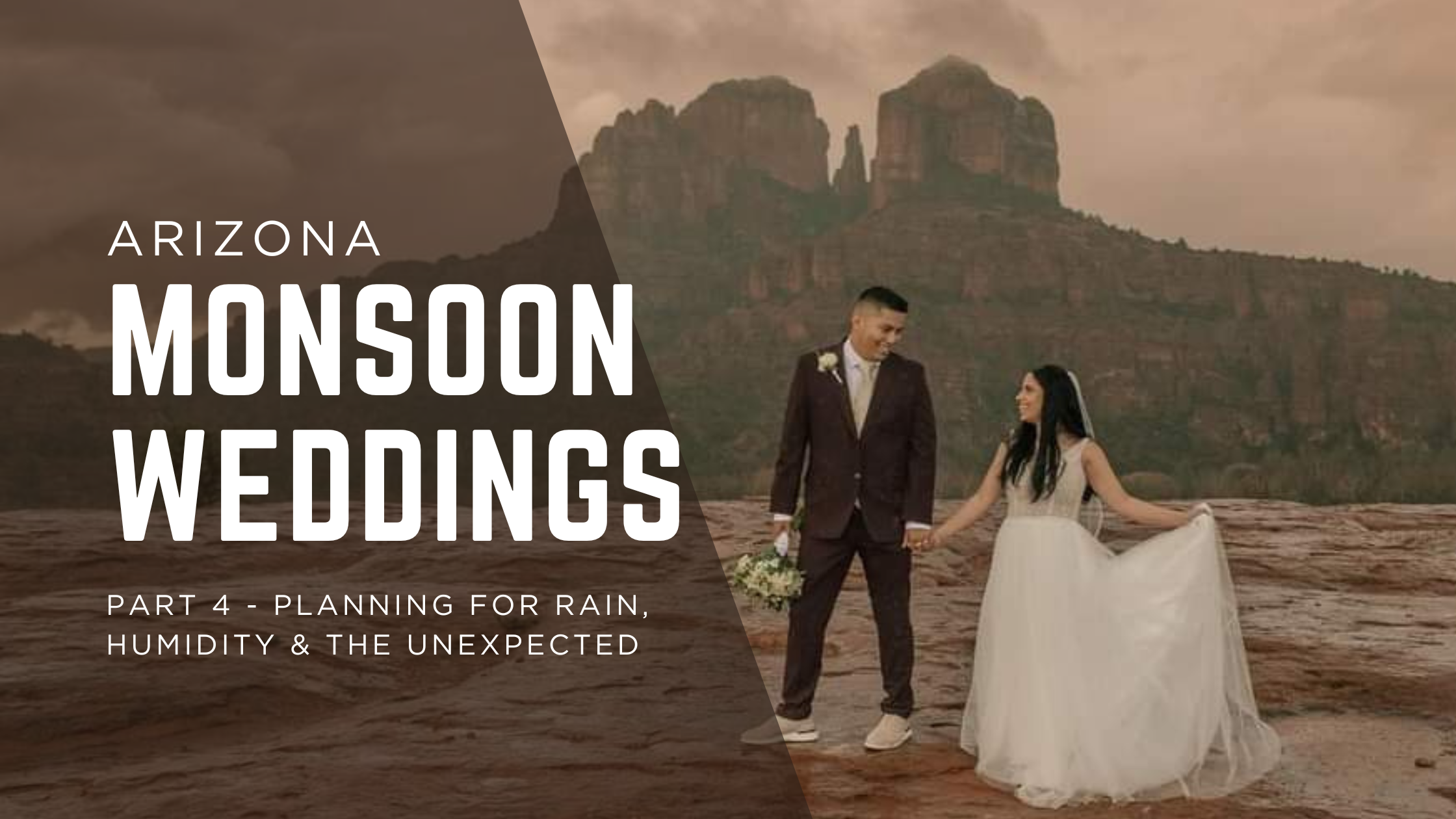
In Part 4 of our Arizona Wedding Beauty Series, we're talking about Arizona monsoon weddings, what sudden humidity and storms can mean for your hair and makeup, and how to build a beauty plan when Mother Nature refuses to RSVP.