You did the research. You scrolled through portfolios, read reviews, compared packages, secured your wedding makeup artist, saved approximately 47 makeup inspiration photos, and finally made it to your wedding makeup trial.
And then you look in the mirror and think:
"Oh no. I hate it."
First, breathe.
A makeup trial, sometimes called a preview, is specifically designed to figure this out before your wedding day. You are not failing at being a client, and your makeup artist is not automatically failing at their job.
But what happens next matters.
A great trial should give you an opportunity to collaborate, communicate, make adjustments, and ultimately determine whether the look, the artist, and the overall experience are right for you.
So if you leave your wedding makeup trial feeling unsure, disappointed, or completely unlike yourself, here's what to do next.
Before You Panic: Make Sure You Actually Hate the Makeup
There is an important difference between disliking the makeup and not being accustomed to seeing yourself professionally made up.
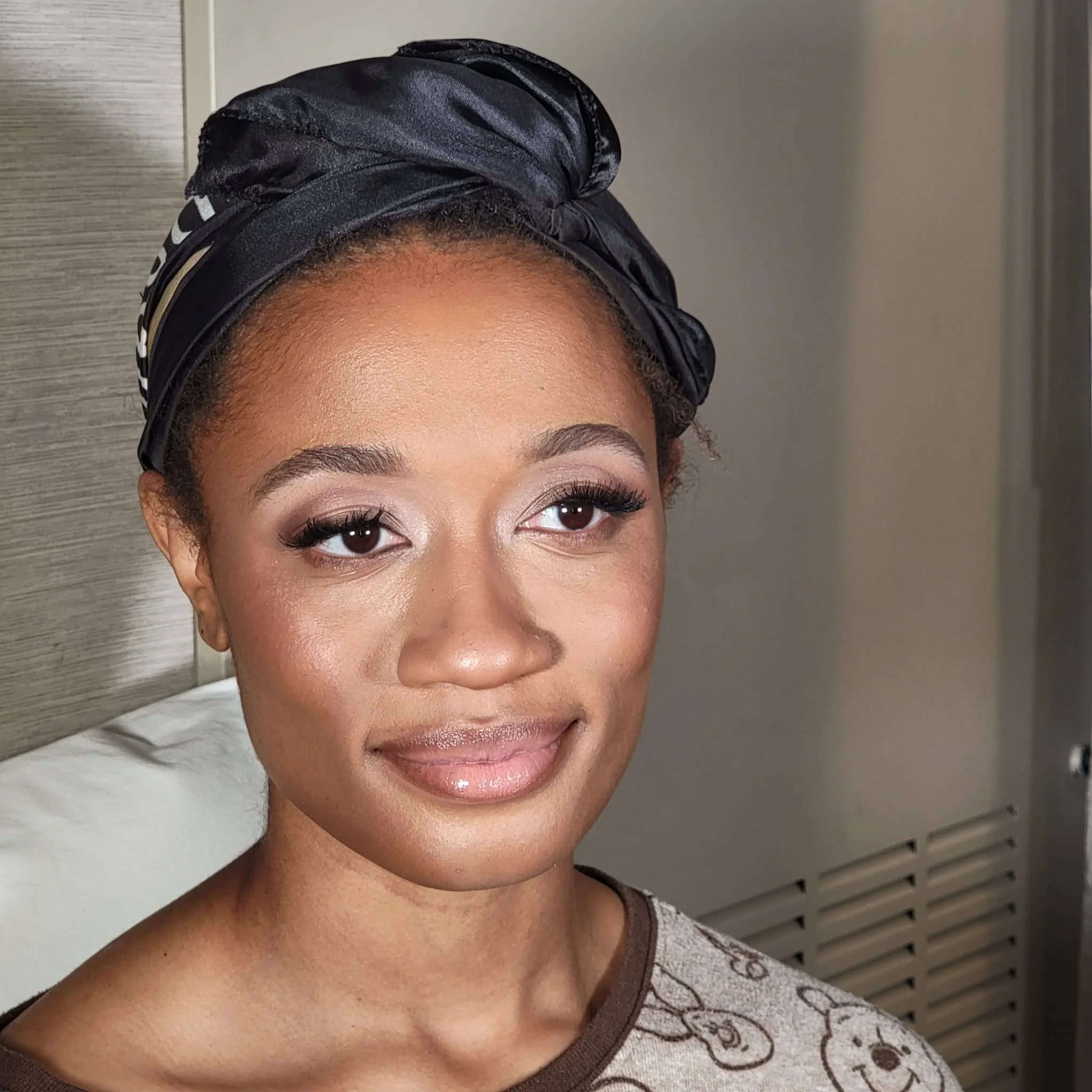
This brides trial while a still beautiful soft glam look, we did defined lip liner with brighter pink ombre effect. The concealer was much brighter/higher contrast. Fuller lashes.
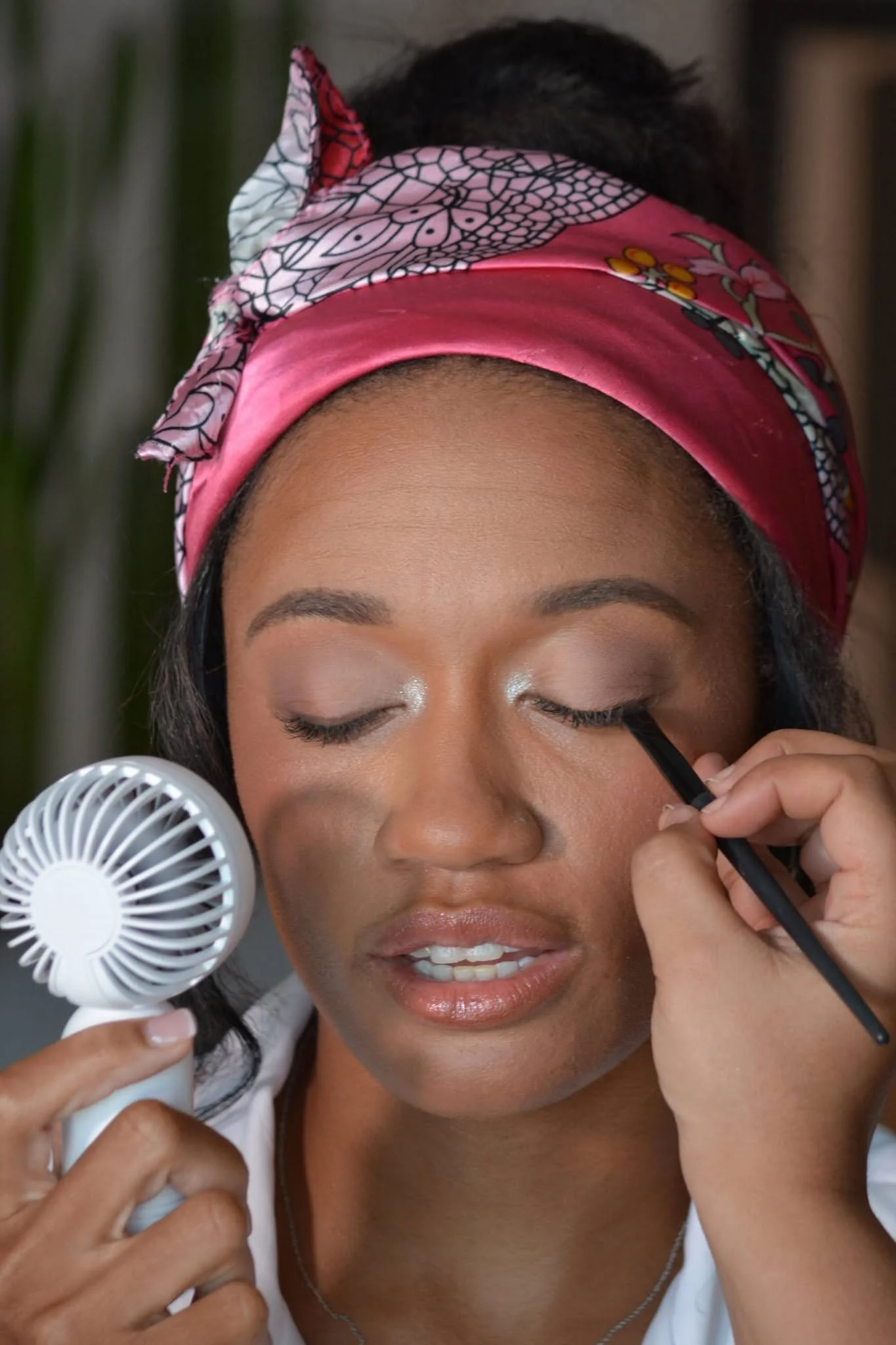
She didn’t request another trial, as she was a destination bride so we discussed changes to the skin with lower contrast concealer creating more natural transition and blend, we ditched the overdone lip and opted for a wash of color and moisturizing lip balm.
If you don't regularly wear makeup, even a beautifully executed natural glam can initially feel like "a lot."
You may notice things you aren't used to seeing:
More defined brows
Individual lashes
Contour or bronzer
More coverage than your everyday makeup
Defined eyes
Lip liner
Highlight or glow
A stronger complexion than you're accustomed to
That doesn't necessarily mean the makeup is wrong.
Give yourself a little time to look at the entire picture.
Walk around. Look at yourself in natural light. Take a few photos. Look at the makeup from different angles. If your artist has professional lighting or photographs your trial, look at those images as well.
Then ask yourself:
Do I dislike the makeup, or do I simply look different than I normally do?
Those are two very different problems.
And remember, your trial isn't only about deciding whether you like the look. It's also an opportunity to see how your makeup behaves. Arizona heat, sweat, sun exposure, and your skin's natural oil production can all affect how your complexion wears throughout the day. If you're getting married in Arizona, understanding how those factors can affect your wedding-day makeup is an important part of preparing for your trial.

Your wedding makeup should still feel like you.
At the same time, "I'm just not used to makeup" should never be used to dismiss genuine concerns.
If you look at yourself and think, This doesn't feel like me, that matters.
Your wedding day is not the time to convince yourself that you should learn to love a look you don't actually want.
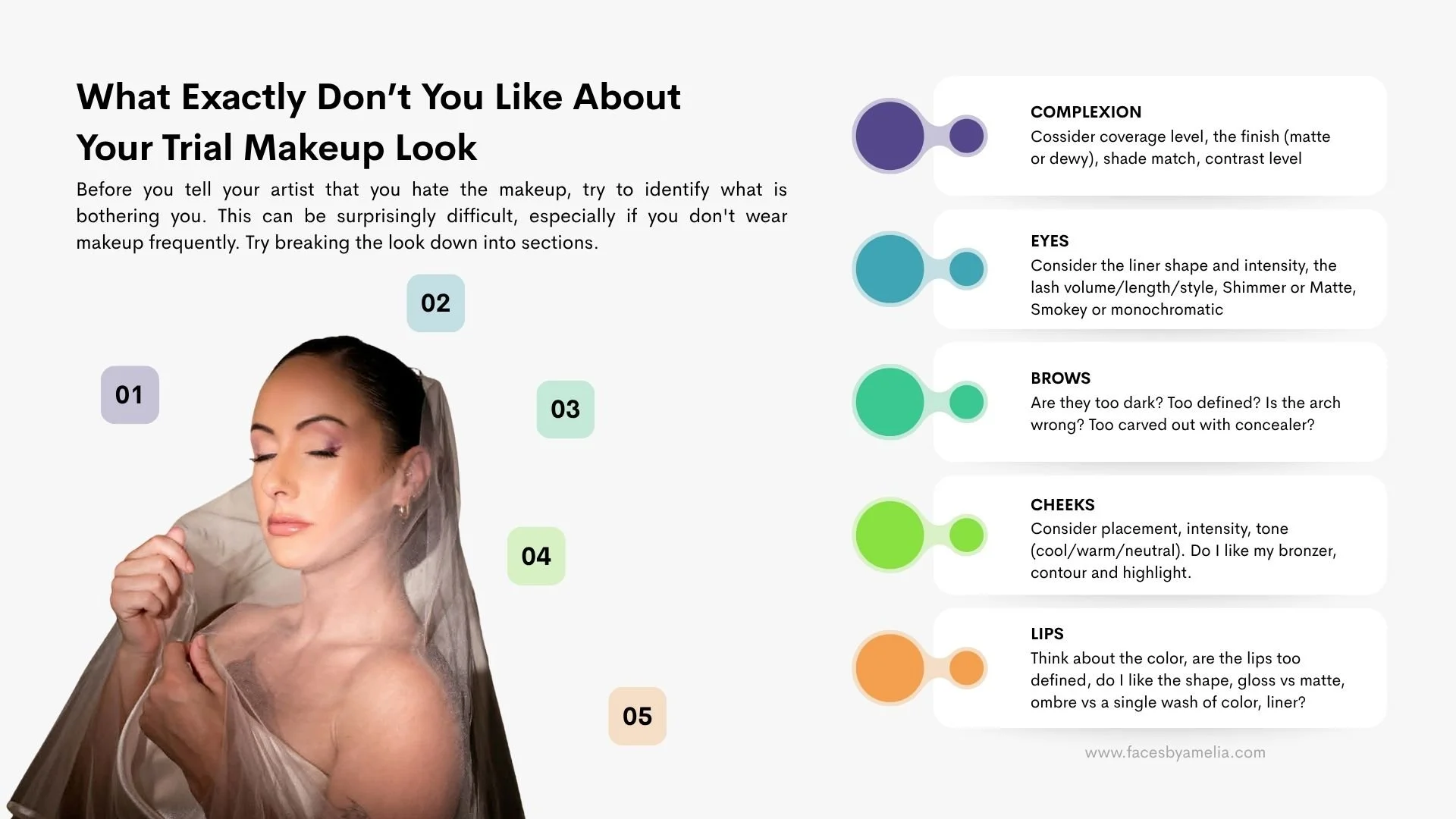
What Exactly Don't You Like?
Before you tell your artist that you hate the makeup, try to identify what is bothering you.
This can be surprisingly difficult, especially if you don't wear makeup frequently.
Instead of:
"I don't know. Something just looks wrong."
Try breaking the look down into sections.
Complexion
Ask yourself:
Is the foundation too full coverage?
Does my skin look too matte or too dewy?
Is the shade or undertone correct?
Can I see texture that I don't normally notice?
Does my skin still look like skin?
Is the concealer too bright?
Is the contour or bronzer too strong?
Eyes
Consider:
Are the lashes too dramatic?
Is the eyeshadow too dark?
Is the eyeliner changing the shape of my eyes?
Do I want more definition or less?
Are my eyes appearing smaller or more open than I prefer?
Brows
Are they:
Too dark?
Too structured?
Too thick?
Too arched?
Simply more defined than you're accustomed to?
Cheeks
Think about:
Blush placement
Blush intensity
Bronzer
Contour
Highlight
Overall warmth
Lips
Ask:
Is the color too dark, pink, brown, peach, or cool?
Is the lip liner too defined?
Do I want a gloss instead of a lipstick?
Does the lip shape still feel like mine?
You don't need professional makeup vocabulary to communicate this.
"My eyes feel too heavy" is useful information.
"I want less coverage around my nose" is useful information.
"I don't think I want individual lashes" is useful information.
Your artist's job is to translate that feedback into makeup decisions.
This Is Why Honesty During Your Makeup Trial Is So Important
Your makeup artist cannot fix something they don't know you dislike.
And this is one of the biggest reasons you should not leave your trial smiling politely and saying:
"It's perfect!"
when you are actually thinking:
"I cannot walk down the aisle looking like this."
Your artist is touching your face for the first time. They are learning how your skin behaves, how your features respond to different techniques, what products work well for you, and how your preferences translate into actual makeup.
The trial is the safest place to have those conversations.
If something doesn't feel right, say something while you're there.
Not two weeks later.
Not the morning of the wedding.
And definitely not after the ceremony.
You are allowed to change your mind.
Maybe you thought you wanted a full strip lash and realize you prefer something softer.
Maybe you saved a dramatic eye look but realize you want your eyes much more natural.
Maybe the foundation coverage is beautiful but feels heavier than you expected.
Maybe you thought you wanted a matte finish and realize you prefer more skin-like radiance.
That's exactly what the trial is for.
How to Give Your Makeup Artist Constructive Feedback
You don't have to know how to recreate the makeup yourself. You just need to communicate what isn't working for you.
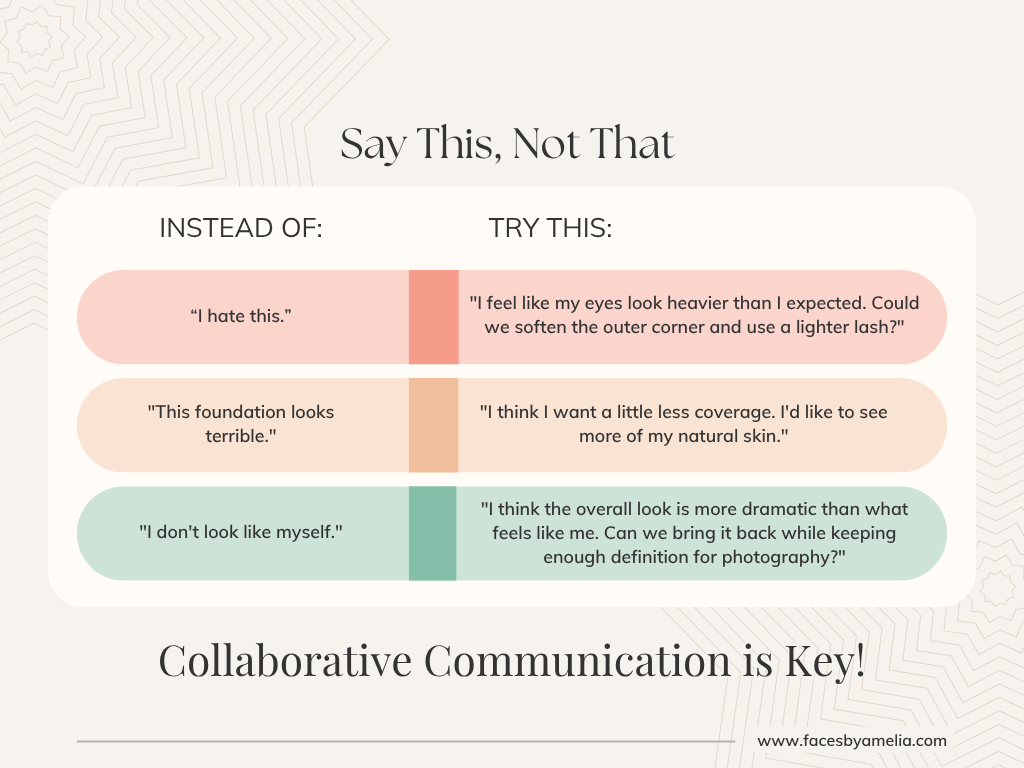
Instead of:
"I hate this."
Try:
"I feel like my eyes look heavier than I expected. Could we soften the outer corner and use a lighter lash?"
Instead of:
"This foundation looks terrible."
Try:
"I think I want a little less coverage. I'd like to see more of my natural skin."
Instead of:
"I don't look like myself."
Try:
"I think the overall look is more dramatic than what feels like me. Can we bring it back while keeping enough definition for photography?"
Specific feedback gives your artist something they can work with.
And if you genuinely cannot explain what you dislike, say that too.
A good artist should be able to ask questions and help you identify what feels off.
What Should Your Makeup Artist Be Able to Troubleshoot?
Not every adjustment requires starting over.
Professional makeup artists should be comfortable troubleshooting and adapting when reasonable changes are requested.
Depending on the situation, that may include:
Adjusting foundation coverage
Changing the finish of the complexion
Softening or intensifying eye makeup
Changing lash styles
Adjusting blush or bronzer placement
Softening contour
Changing lip color
Adjusting brow definition
Modifying the overall intensity of the look
Sometimes a small change completely transforms how you feel about the makeup.
This is why a collaborative trial is so important.
When Does a Second Makeup Trial Make Sense?
Sometimes the first trial gets you close, but you're not quite there.
That doesn't necessarily mean you need a new makeup artist.
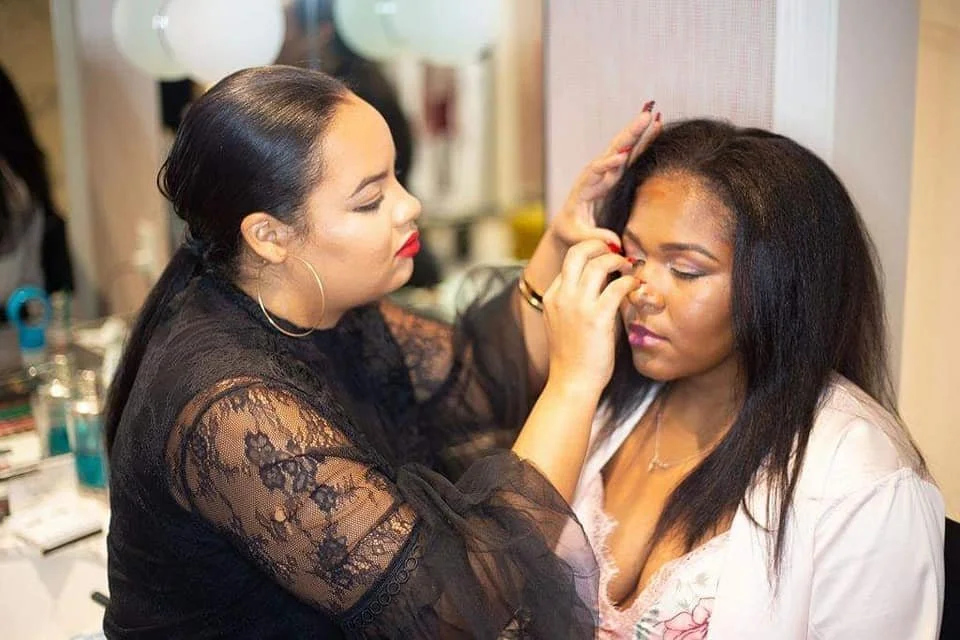
The goal of a second trial isn’t perfection. It’s clarity.
A second trial may make sense when:
You know what needs to change.
If you loved most of the look but want softer lashes, less coverage, a different lip, or a more natural eye, those are relatively straightforward adjustments.
You changed your mind about your original inspiration.
You may discover that the look you thought you wanted isn't actually the look you feel best wearing.
Your artist needs to troubleshoot something specific.
Your skin may have reacted differently than expected, or a particular product or technique may not have performed the way you wanted.
You and your artist are still communicating well.
This is a big one.
If you feel heard, respected, and confident that your artist understands what you're asking for, a second trial can be a productive next step, or determined to not be necessary at all. It is really about the trust and relationship you have built with your artist.
When Is It Actually Time to Find Another Makeup Artist?
There is a difference between needing another adjustment and realizing that the artist simply isn't the right fit.
Sometimes the problem isn't the makeup.
It's the mismatch.
Consider moving on if:
Your artist becomes defensive about reasonable feedback.
You should be able to say, "I don't like this" without being made to feel difficult, ungrateful, or unreasonable.
Professionalism goes both ways, but your artist should be able to receive respectful feedback without taking it personally.
The artist's signature style is fundamentally different from what you want.
This is where your research before booking matters.
If an artist's portfolio consistently shows soft, natural makeup and you want dramatic, editorial glam, a trial may reveal a fundamental style mismatch.
Neither approach is necessarily wrong.
You may simply be the wrong client for that artist.
You don't feel heard.
If you have clearly communicated what you want and the artist repeatedly ignores those preferences, that's a problem.
The artist refuses reasonable modifications.
Flexibility has limits. An artist doesn't need to agree to recreate another artist's exact work or perform techniques they don't offer.
But there should be room for reasonable collaboration within their skill set and style.
You no longer trust the experience.
This is ultimately the biggest question.
Red Flags: They're Not Always on the Artist's Side
Let's talk about something that doesn't get discussed enough.
Sometimes the trial goes badly because neither side did enough homework.
You should absolutely expect professionalism from your makeup artist.
But you also have a responsibility to research who you're hiring.
Red flags when booking a makeup artist
Before signing a contract, look at:
Their actual portfolio
Recent client reviews
The consistency of their work
Whether they regularly create the style you want
Their communication style
Their contract and policies
What their trial includes
What happens if changes are needed
Their experience with your skin tone, features, and desired aesthetic
Don't book an artist because they are available if their work doesn't actually resonate with you.
A trial cannot magically turn an artist's signature style into something completely different.
And yes, clients can have red flags too.
Being honest doesn't mean being disrespectful.
Your artist is a professional, but they're also a person.
"That's not quite what I envisioned. Can we soften the eye makeup?" is productive.
"You clearly don't know what you're doing" is not.
You don't have to love every step of the trial. You don't have to protect your artist's feelings by pretending you're happy.
But respectful communication is still the standard.
Clear communication isn't confrontation. It's collaboration.
How We Approach Makeup Trials at Faces By Amelia
At Faces By Amelia, we don't view the makeup trial as simply, "Sit down and let us do your makeup."
The goal is to create a preview of the wedding-day experience while giving us time to learn you.
We intentionally allow time for conversation, consultation, application, adjustments, and feedback. Which means this isn’t a quick do-and-go service.
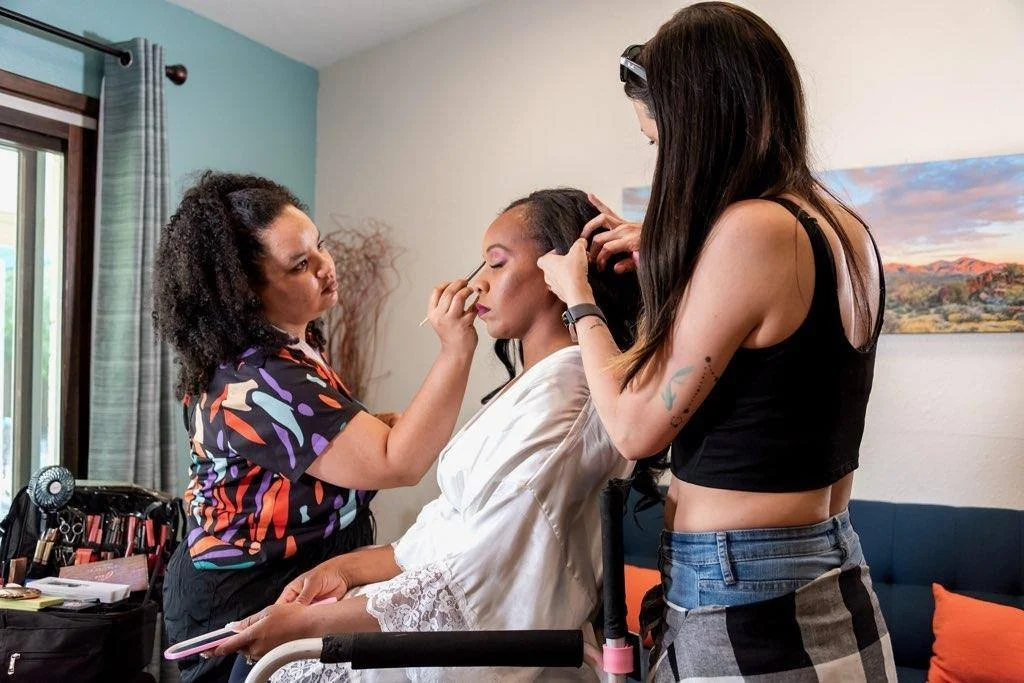
Throughout the appointment, we check in with our clients rather than waiting until the very end to ask, "So...what do you think?" We like to call them progress reports.
That matters because not everyone can immediately articulate what they want or often communicate what feels off when they’re looking a completed application.
You may know that something feels too heavy without knowing whether the problem is the foundation, contour, powder, blush, or combination of all four.
That's okay.
Our job isn't to expect you to speak fluent makeup artist.
Our job is to listen, ask questions, explain what we're seeing, and help translate your preferences into a look that feels intentional.
We want you talking to us during the trial.
Tell us if something feels too heavy.
Tell us if you want more.
Tell us if you want less.
Tell us if you changed your mind.
Tell us if you don't know what you want.
Tell us if you look in the mirror and think, I don't feel like myself, because often times we can read your body language and leave feeling confused on the success of the trial.
That conversation is valuable.
Because the goal isn't simply to create beautiful makeup.
The goal is to create beautiful makeup that you actually want to wear.
What If You Decide You Need to Break Up With Your Makeup Artist?
Sometimes you communicate clearly, make reasonable adjustments, try again, and still know:
This isn't my artist.
That's okay.
You are allowed to change vendors when the relationship or service is no longer the right fit.
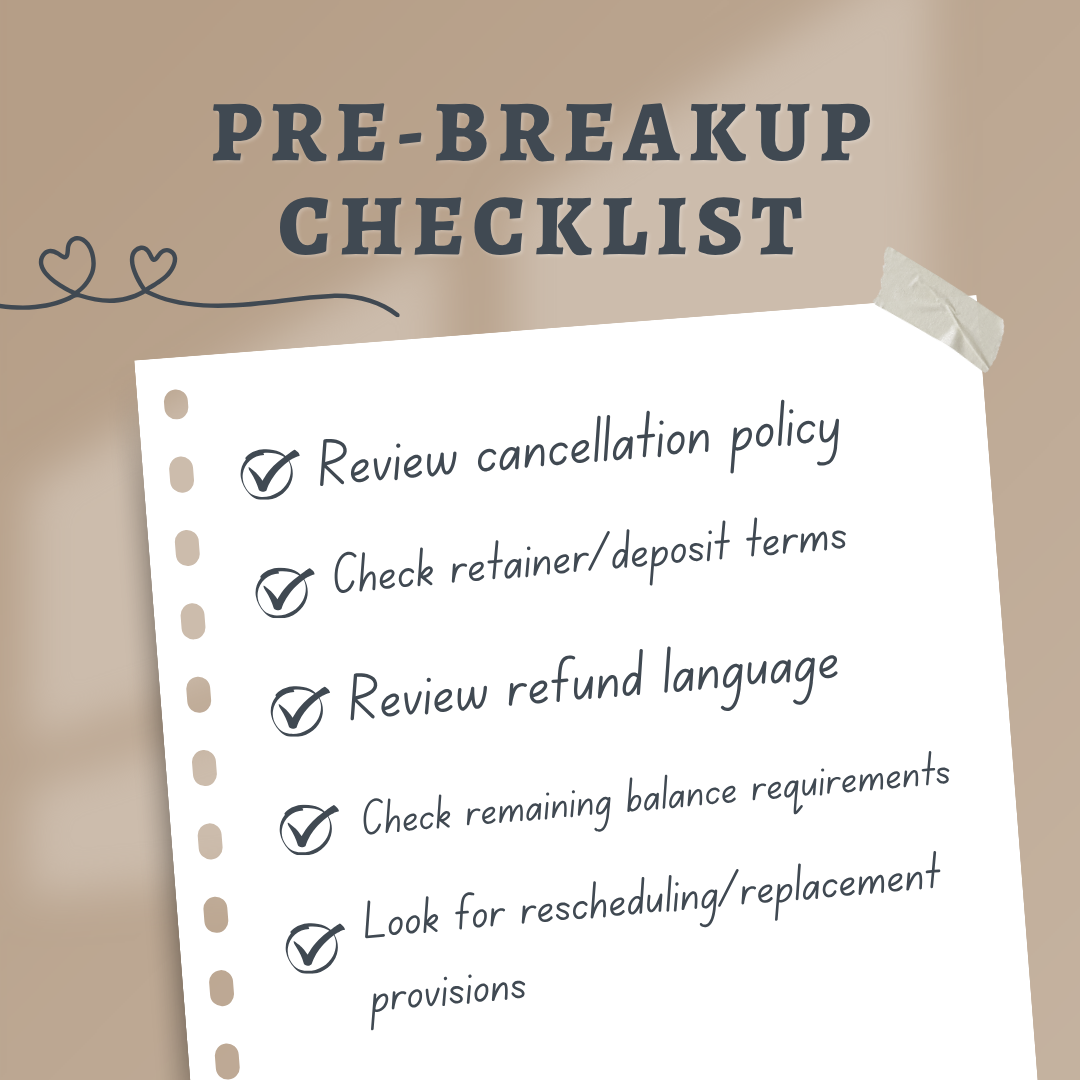
Before you send the breakup text, however, pull out your contract.
Review the sections covering:
Cancellation
Termination
Retainers or deposits
Refund policies
Remaining balances
Rescheduling
Replacement artists
Cancellation deadlines
Your contract determines what you're financially entitled to and what obligations you still have.
Don't assume that disliking your trial automatically means you receive a refund.
And don't assume that you have no options simply because you've signed a contract.
Read the actual agreement.
Most importantly, Communicate early!
If you're unsure about the language or the financial consequences, consider asking the vendor to clarify their policy in writing.
Then, if you decide to move on, communicate professionally and as early as possible.
The earlier you address the problem, the more options everyone has.
This is also another reason not to wait until the last minute to schedule your trial.
Some artists may restrict trials 60-90 days out, however we let you book anytime between booking and wedding so there’s ample time for all parties to make clear decisions without feeling rushed or scrambling last minute.
The Most Important Thing to Remember
Your wedding makeup does not need to look exactly like your everyday makeup.
It can be elevated.
It can be more polished.
It can be more defined.
It can photograph beautifully.
It can even surprise you.
But you should still be able to look in the mirror and recognize yourself.
"This doesn't feel like me" is not being difficult.
It's important information.
Your trial exists so you can say it.
Your makeup artist exists to help you work through it.
And your wedding day is the place where you should feel confident, comfortable, and completely yourself.

So speak up.
Ask questions.
Request reasonable changes.
Give your artist the opportunity to troubleshoot.
And if, after honest communication and reasonable adjustments, you still don't feel confident?
It's okay to say:
"I don't think we're the right fit."
That's not failure.
That's exactly what the trial was designed to help you discover.
Haven’t had your trial yet, but looking for tip on how to prepare? Check out our blog post “From Vision to Reality : How to Prepare for Wedding Hair and Makeup Trial” where we cover all the things you’re probably stressing about.